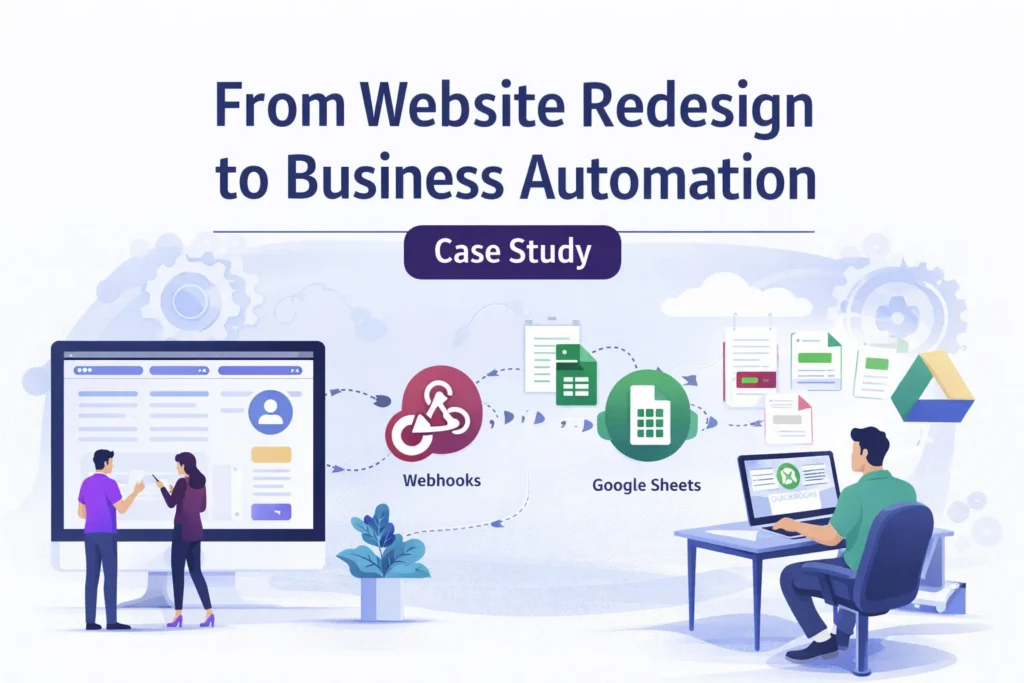
From Website Redesign to Business Automation: A Real-World Client Case Study
When Geeky Events first approached us, the request was simple:
“We need a new website.”
But as with many business owners, once we began reviewing their workflow, it became clear the real opportunity wasn’t just a new design — it was automation, structure, and long-term scalability.
This project quickly evolved into a perfect example of how modern websites should work:
not just as marketing tools — but as operational systems.
The Original Problem
The Problem
Geeky Events manages large volumes of vendor applications for their markets and events. Their existing process relied heavily on:
✅ Manual form submissions
✅ Email notifications
✅ CSV exports
✅ Copy-and-paste between spreadsheets
✅ Manual contract preparation
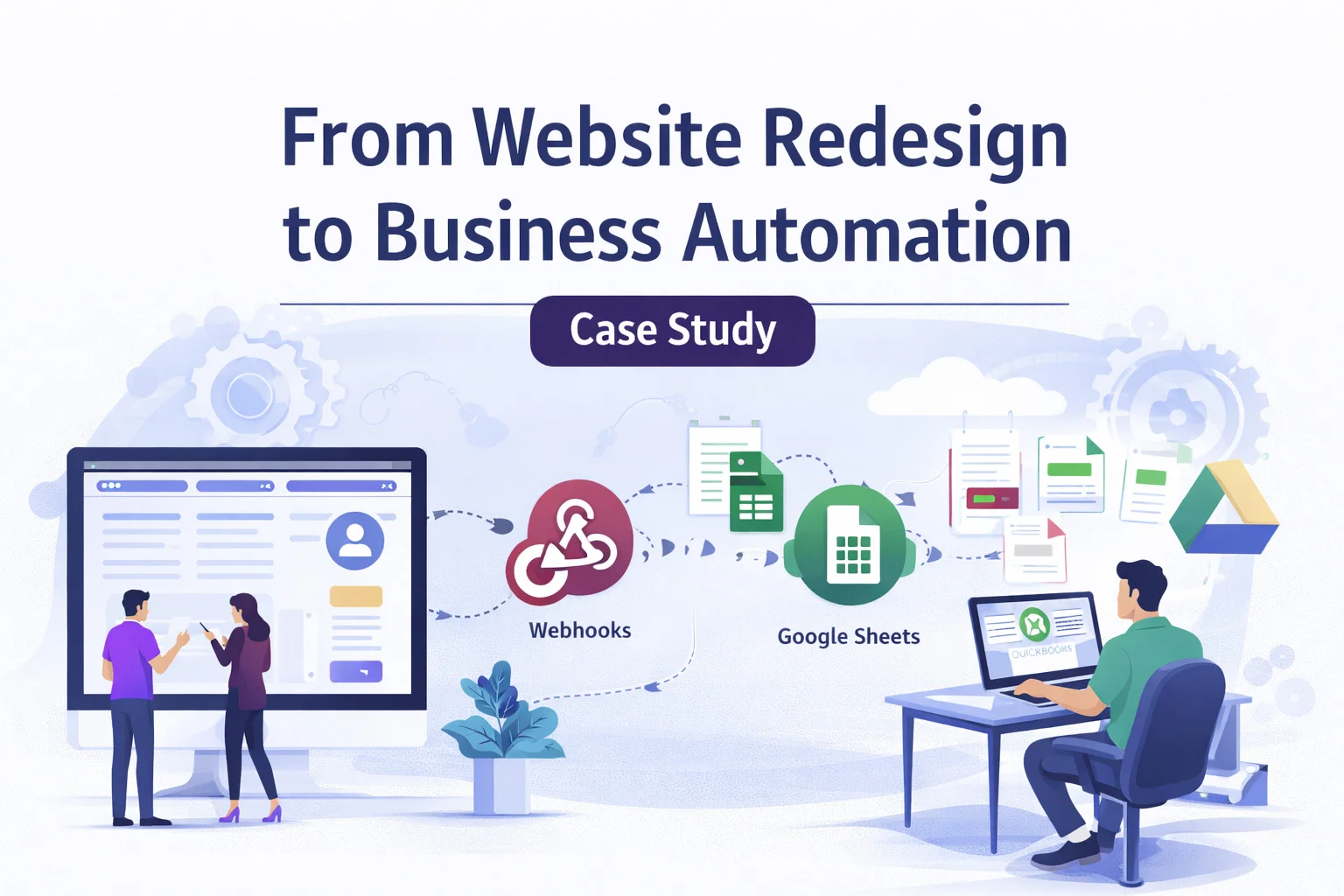
✅ Manual invoice creation in QuickBooks
✅ Re-building records when sheets stopped syncing
While the system technically worked, it was:
✅ Time-consuming
✅ Error-prone
✅ Difficult to audit
✅ And extremely fragile when something broke
The biggest pain point?
“When the sheet stopped updating, I had to export CSV files with ALL applications and manually separate the new ones. It was a massive headache.”
Our Review & Philosophy
At Valiant Digital, we believe that a website should reduce workload – not create more of it.
When we reviewed Geeky Gift Markets’ existing setup, one thing became very clear: nothing was broken — but everything was working harder than it needed to.
Applications were being collected successfully, data was landing in Google Sheets, and Alycia had built a reliable manual workflow around it. But that workflow required constant human effort: exporting CSVs, cleaning columns, copying data between sheets, tracking approvals, creating invoices, sending contracts, and organizing files manually.
In other words — the system worked, but it depended entirely on her time and attention.
At Valiant Digital, our philosophy isn’t to replace systems that already function — it’s to connect and elevate them.
Rather than forcing a brand-new platform or overcomplicating the process, our approach was:
• Keep Google Sheets as the master record (where Alycia is already comfortable).
• Keep WordPress as the front-end collection point.
• Add automation in between to remove repetitive manual steps.
• Design the system so it can grow without breaking.
Automation should feel invisible — not disruptive.
Our goal is always to build systems that:
• Reduce human error
• Save time and mental energy
• Maintain transparency and control
• And allow business owners to stay in charge of decisions
Instead of replacing Alycia’s process, we are strengthening it with automation layers that activate only when needed.
This means:
• No more re-entering the same data.
• No more broken exports.
• No more hunting for files or forgetting steps.
• And no more bottlenecks when volume increases.
Automation should not make a business feel robotic.
It should make it feel lighter.
And that philosophy is exactly what guides every automation system we build.